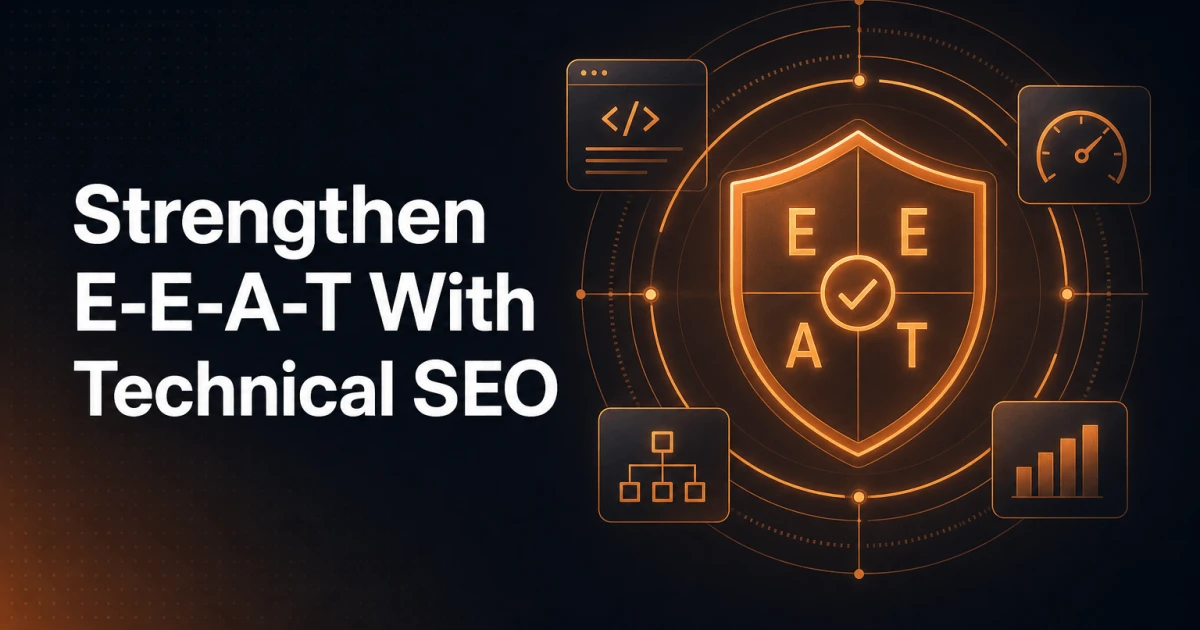
E-E-A-T—Experience, Expertise, Authority and Trustworthiness—has become a decisive factor in SEO, as Google increasingly focuses on highlighting credible and quality-rich content. This is especially true for YMYL pages ("Your Money, Your Life"), where precision and reliability are most important. But how can technical SEO support E-E-A-T and increase your website's credibility?
In this guide we review effective technical SEO strategies, such as schema markup, author tags and optimized meta information, that can help lift your page's E-E-A-T level. We also introduce Signocore SEO, a smart WordPress plugin that simplifies these technical tasks, so you can focus on building trust and authority without unnecessary complexity.
What is E-E-A-T, and Why Is It Important for SEO?
E-E-A-T stands for Experience, Expertise, Authority and Trustworthiness. These four elements are part of Google's quality guidelines, which assess the value and reliability of content. Especially for topics that affect health, finances and law (YMYL topics), it is important to have a strong E-E-A-T structure, as Google wants to rank credible sources highly. Here is what each element means:
Experience refers to firsthand insight, e.g. through personal reviews or product tests.
Expertise is about knowledge and skill within the subject.
Authority indicates credibility and recognition in the industry or niche.
Trustworthiness focuses on reliability and accuracy in the content, which is especially important for YMYL topics.
Together, these factors create the foundation for quality content that Google wants to highlight.
How Technical SEO Supports E-E-A-T
While quality content is crucial, technical SEO can help strengthen E-E-A-T by making it easier for search engines to assess the site's credibility. Let's take a closer look at some technical strategies that can help you lift your E-E-A-T level.
1. Schema Markup: Improves Content Understanding and Credibility
Schema markup, also known as structured data, is code that helps search engines understand the content and context of a page. By adding schema markup, you can provide explicit information about your content, which can result in improved search results (rich snippets) that attract users and build trust.
For E-E-A-T:
Author Schema: Clearly identify the author of the content, which is important for YMYL pages where expertise must be demonstrated.
Review Schema: Use review schema for product or service reviews and show firsthand experience, which strengthens the "Experience" element.
Organization Schema: Define your organization with organization schema to boost "Authority" by linking the content to a credible source.
Schema markup ensures that Google understands who is behind the content and can verify its relevance and credibility.
2. Author Tags and Bio Pages: Establishing Author Expertise and Credibility
When content is linked to author profiles, it shows that qualified individuals stand behind the information, which is crucial for E-E-A-T. By including author biographies on individual pages, linked to detailed author pages, you can provide insight into the author's qualifications, expertise and experience.
Use author tags to connect articles with author profiles on WordPress. This makes it possible for both search engines and users to see that the content is created by experts, which strengthens authority.
Detailed author bios: Include a short bio, qualifications and links to social profiles for additional credibility.
For YMYL topics, author tags and bio pages are crucial, as they directly affect the "Expertise" and "Authority" factors, making it easier for both search engines and users to assess the content's value.
3. Meta Information: Build Trust in Search Results
Meta information such as meta titles and descriptions plays an important role in E-E-A-T by controlling the first impression of your content. By creating informative and precise meta descriptions and titles, you can improve click-through rate and immediately convey credibility.
Meta titles and descriptions: Ensure they accurately reflect the content, and emphasize clarity and relevance. Avoid misleading information, as this can undermine trust and lead to high bounce rates.
Meta keywords for transparency: Although meta keywords are not heavily weighted by Google, they can provide additional context to the content and strengthen niche expertise.
By tailoring meta information to the content's purpose, you contribute to "Credibility" and show both search engines and users that the content is relevant and reliable.
4. Structure and Navigation: Create a User-Friendly Experience
A clear and well-structured site architecture supports E-E-A-T by providing a credible and accessible experience. This includes:
Clear navigation and internal links: Create logical paths so users can easily find relevant content, increasing "Experience" and "Trustworthiness".
SSL certification: An HTTPS-secured site is crucial for building trust. Without this security, Google can mark the site as unsafe, which can negatively affect credibility.
A solid site architecture not only helps with user engagement but also signals that the site prioritizes reliability, which Google values highly.
Signocore SEO: A Simple Solution for E-E-A-T and Technical SEO on WordPress
When it comes to implementing technical SEO strategies on WordPress, Signocore SEO stands out as a user-friendly plugin, ideal for small business owners, bloggers and web admins focusing on E-E-A-T. Signocore SEO simplifies technical SEO tasks by focusing on the most important elements, so you can strengthen your site's credibility and authority without unnecessary complexity.
Important Features in Signocore SEO
Schema Markup: Signocore SEO offers an intuitive UI to add schema markup to your pages and posts, so search engines better understand your content and thereby strengthen E-E-A-T signals.
Meta Tag Administration: Easily customize meta titles, descriptions and keywords for each page, which improves relevance and credibility directly in the plugin settings.
Author Information: Signocore SEO makes it easy to add and show author details, which enhances expertise and authority signals on each post.
By focusing on these fundamental SEO elements, Signocore SEO is ideal for WordPress users who want a simple solution to strengthen E-E-A-T without being overwhelmed by feature overload.
Practical Tips for E-E-A-T Implementation with Signocore SEO
Optimize Author Profiles: Use Signocore SEO's author feature to build detailed author biographies that highlight experience and qualifications.
Add Schema Markup to Important Pages: For YMYL pages, you should add structured data that indicates expertise and credibility.
Ensure Accurate Meta Tags: Create precise meta titles and descriptions for YMYL topics to set the right expectations for both users and search engines.
Signocore SEO makes it possible for users to focus on these basic E-E-A-T aspects, save time and avoid feature overload.
Closing Thoughts
With Google's increased focus on E-E-A-T, especially for YMYL topics, it is important for websites to communicate trust, authority and expertise through both content and technical SEO. By using strategies such as schema markup, author tags and meta information, you can strengthen your site's credibility and rank higher in search results.
For WordPress users, Signocore SEO offers an easy solution to handle these technical tasks effectively, making it an ideal plugin for those who want to build a credible and reliable website. Whether you run a personal blog or manage a business site, Signocore SEO can help you lift your E-E-A-T and strengthen user trust – one technical lever at a time.
To get started with Signocore SEO and begin optimizing your page for E-E-A-T, visit Signocore SEO.