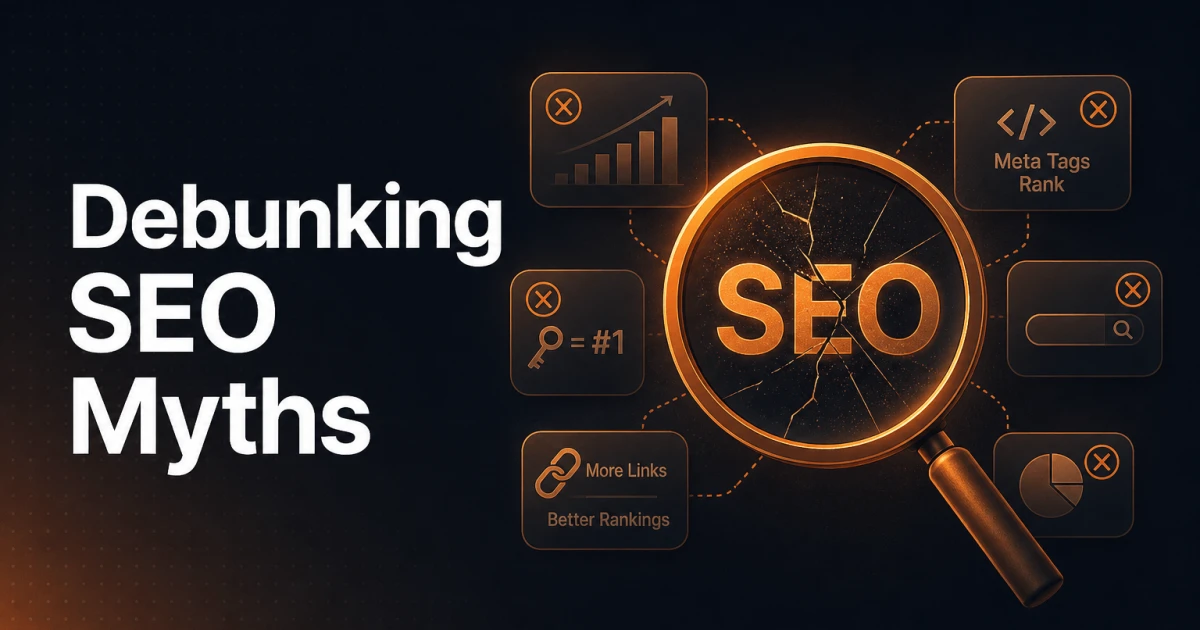
In today's digital landscape, search engine optimization (SEO) plays a central role in driving visibility, traffic, and growth for businesses online. But despite its importance, SEO is surrounded by myths and misunderstandings that can mislead marketers and website owners. These myths not only create confusion but can also lead to ineffective strategies that waste time and resources.
The purpose of this article is to debunk some of the most common SEO myths and provide clarity on what really works in search engine optimization. By removing these misconceptions, you'll be better equipped to develop and execute a more effective, evidence-based SEO strategy.
Myth 1: SEO is a one-time task
One of the most persistent myths about SEO is the belief that it's a one-time task. Some think that once they've optimized their website, they can sit back and watch the traffic roll in. But SEO is an ongoing process that requires continuous attention and adaptation.
Search engines like Google constantly update their algorithms, and what worked yesterday might not work tomorrow. Regular content updates, optimization for new keywords, and keeping up with algorithm changes are essential to maintain and improve your search rankings.
Myth 2: More keywords = better rankings
It's easy to assume that stuffing your content with as many keywords as possible will improve your rankings. But this approach, known as keyword stuffing, can actually harm your SEO efforts.
Search engines prioritize content that is relevant and naturally written. Overusing keywords can make your content sound forced and reduce its quality, leading to a poor user experience. Instead, focus on understanding user intent and integrating keywords naturally into high-quality content that addresses your audience's needs.
Myth 3: SEO is only about ranking #1 on Google
While it's true that ranking high on Google matters, a narrow focus on reaching the first position can be misleading. A top placement doesn't guarantee success if the traffic it drives isn't relevant or if it doesn't lead to conversions.
A more holistic approach involves considering traffic quality, user experience, and conversion rates. Sometimes a first-page ranking or even ranking just below the top can yield better results if it attracts more engaged and qualified visitors.
Myth 4: Meta tags aren't important anymore
With so much focus on content and backlinks, some think meta tags have lost their significance in SEO. This couldn't be further from the truth. Meta tags, including title tags and meta descriptions, still play a crucial role in how your content is presented in search results pages (SERPs).
Well-crafted meta tags can improve your click-through rates by making your listing more appealing and relevant to users. While they may not directly affect rankings as much as before, they certainly influence how many users choose to visit your site.
Myth 5: Social media has no impact on SEO
There's a common misconception that activity on social media doesn't affect your search rankings. While signals from social media may not directly affect your rankings, their indirect impact should not be underestimated.
Social media can boost your online presence, drive traffic to your website, and increase brand visibility. When people share your content, it can lead to more backlinks and greater online engagement, both of which benefit your SEO efforts.
Myth 6: Backlinks are the only thing that matters
Backlinks are a critical component of SEO, but relying solely on them is a mistake. A successful SEO strategy is multifaceted and includes high-quality content, on-page optimization, and a strong user experience.
Search engines consider a wide range of factors when ranking websites. A well-rounded approach that balances content quality, technical SEO, and user satisfaction is essential for long-term success.
Myth 7: Google Ads can boost organic rankings
Some believe that running Google Ads will help improve their organic search rankings. This myth likely stems from the visibility that ads can provide, but it's important to understand that Google Ads and organic rankings operate independently.
Google clearly separates paid and organic search results. While ads can drive traffic and provide valuable data to optimize your SEO strategy, they do not directly affect your organic rankings.
Myth 8: Local SEO isn't necessary for small businesses
Small businesses often overlook local SEO and think it's only for larger companies. In reality, local SEO is vital for small businesses that want to attract nearby customers.
Optimizing for local search helps you appear in relevant searches from people in your area, increasing foot traffic and local brand awareness. Even if your business is small, local SEO can deliver significant benefits by targeting customers who are ready to make a purchase.
Myth 9: SEO takes too long to show results
SEO is often viewed as a slow process, leading some to think it's not worth the effort. While it's true that SEO is a long-term strategy, it's a mistake to dismiss it because it doesn't deliver immediate results.
The timeline for seeing results can vary, but consistent, well-executed SEO efforts will eventually pay off. Unlike quick fixes, the benefits of SEO accumulate over time and lead to sustainable growth and visibility.
Myth 10: You don't need SEO if you have a good product or service
Even the best product or service won't sell itself if people can't find it. SEO is essential to ensure that your offerings reach the right audience.
Without proper SEO, your website may not appear in relevant searches, meaning potential customers might never discover what you have to offer. Investing in SEO helps ensure that your good product or service gains the visibility it deserves.
Closing thoughts
The world of SEO is full of myths that can mislead you if you're not careful. By debunking these common misconceptions, we hope to give you a clearer understanding of what truly works in SEO.
Remember, effective SEO is about more than just quick wins. It's about investing in strategies that deliver long-term success. Stay informed, avoid falling for myths, and focus on sustainable SEO practices to drive meaningful results for your business.