
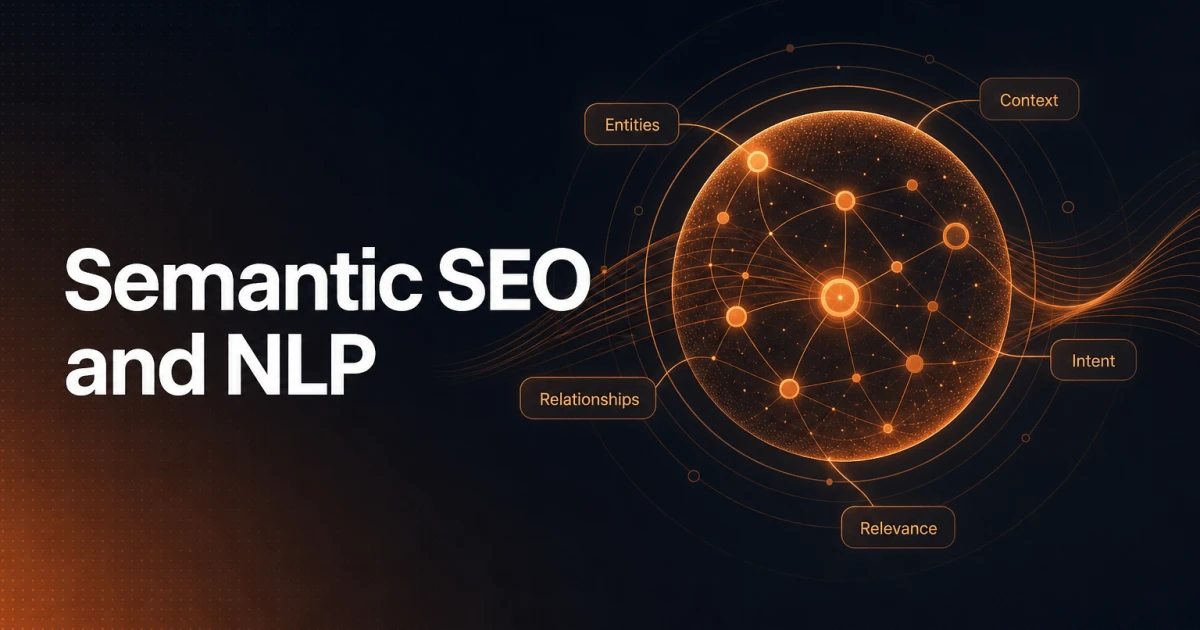
Search Engine Optimization (SEO) has changed dramatically in line with the development of Natural Language Processing (NLP) and new algorithms like Google's BERT and MUM. Instead of focusing on pure keywords, search engines now look at the overall content and the meaning behind the search terms. This development is called Semantic SEO, and it means that websites must think differently when optimizing their content.
In this article, we will review how NLP changes SEO, why entity-based optimization and topic clusters are becoming increasingly important, and how you can use the Signocore SEO plugin to simplify the technical SEO work such as structured data and meta descriptions.
How NLP changes search engines
What is NLP, and why is it important?
Natural Language Processing (NLP) enables machines to understand and interpret human language so they can better answer questions and present relevant content. In search engines, NLP means that search engines no longer solely look at keywords, but at the contextual meaning behind these searches.
Google's algorithms, such as BERT (Bidirectional Encoder Representations from Transformers) and MUM (Multitask Unified Model), enable the search engine to understand words in relation to each other. BERT makes it easier for Google to interpret the intention behind a search, while MUM can perform advanced tasks such as understanding complex queries, analyzing images, and providing more precise answers, even across languages.
The shift from keywords to entities
With NLP, the focus shifts from simple keywords to entities, which means specific objects like people, places, or concepts. Search engines establish connections between these entities, helping them present more precise and relevant results to users. This has led to Semantic SEO now requiring content to be optimized based on wholes and relationships between entities, not just isolated keywords.
Why entity-based optimization and topic clusters are important
What is entity-based optimization?
Entity-based optimization means structuring your content around specific entities that search engines can easily recognize and categorize. This enables search engines to understand the relationships your content has with other relevant topics and thus present it in multiple searches.
For example, if you're writing about "digital marketing," you should include relevant entities like "SEO," "content marketing," or "social media." When search engines can see these connections, the chances increase that your content appears in more searches and contexts.
Topic clusters as a central strategy
Topic clusters are groups of content that relate to a specific topic, covered from different angles. This helps search engines understand that your website offers in-depth coverage of a given topic, which can improve your authority in the eyes of search engines.
With the increasing importance of NLP, it's important to build a cluster of content that covers related topics and not just isolated blog posts. By interlinking these articles, you signal to search engines that your website is an authority in a particular area, which can lead to better rankings.
Signocore SEO: Your solution for structured data and technical SEO
Although Semantic SEO and NLP can seem complex, there are tools that can make the optimization process much easier. This is where Signocore SEO comes into the picture – a WordPress plugin that makes it easy to handle technical SEO such as structured data, meta descriptions, and other important tasks.
Why choose Signocore SEO?
Structured data without hassle: Structured data helps search engines understand what your content is about. Signocore SEO makes it easy to add schema markup, which is necessary to get your content to appear in special search features like "featured snippets" or "knowledge panels".
Optimization of meta descriptions: Signocore SEO helps generate effective and optimized meta descriptions that appeal to both users and search engines. Meta descriptions still play a big role in your visibility and click-through rates, so it's important to get them right.
Focus on entities: Signocore SEO supports entity-based optimization by ensuring that your content is structured in a way that search engines understand. This means your site becomes more visible for related searches and you can cover more keywords and topics more effectively.
Performance and speed: Signocore SEO is designed to be lightweight, so you avoid making your site slow. With optimized code and performance in focus, you can focus on creating quality content without worrying about technical SEO problems.
Ease of use: You don't need to be an SEO expert to optimize your WordPress site with Signocore SEO. The plugin handles the most technical tasks, so you can concentrate on creating great content that is optimized for NLP-based search engines.
Concluding thoughts
Semantic SEO and NLP technologies like Google's BERT and MUM radically change how we should think about content optimization. Instead of focusing on individual keywords, websites should now concentrate on entities and topic clusters to be regarded as relevant and authoritative by search engines.
With a tool like Signocore SEO, you can easily manage the technical aspects of SEO, from structured data to meta descriptions, and ensure that your site is optimized for future search engines. It makes it easier to focus on content and ensure that it aligns with the search engines' semantic understanding.
Do you want to optimize your WordPress site for future SEO? Read more about Signocore SEO here!